 Complos
Submitting a Title 5 Inspection in Quincy: The Few Septic Systems Left and the BOH That Tracks Them
Complos · September 1, 2026
How to file a Title 5 with the Quincy Health Department on the small private-septic inventory that survives in Furnace Brook valley, Squantum, and a few coastal lots. Working with concentrated agent knowledge.
Submitting a Title 5 Inspection in Quincy: The Few Septic Systems Left and the BOH That Tracks Them
By The Complos Team. Last reviewed 2026-05-14.
TL;DR. How to file a Title 5 with the Quincy Health Department on the small private-septic inventory that survives in Furnace Brook valley, Squantum, and a few coastal lots. Working with concentrated agent knowledge.
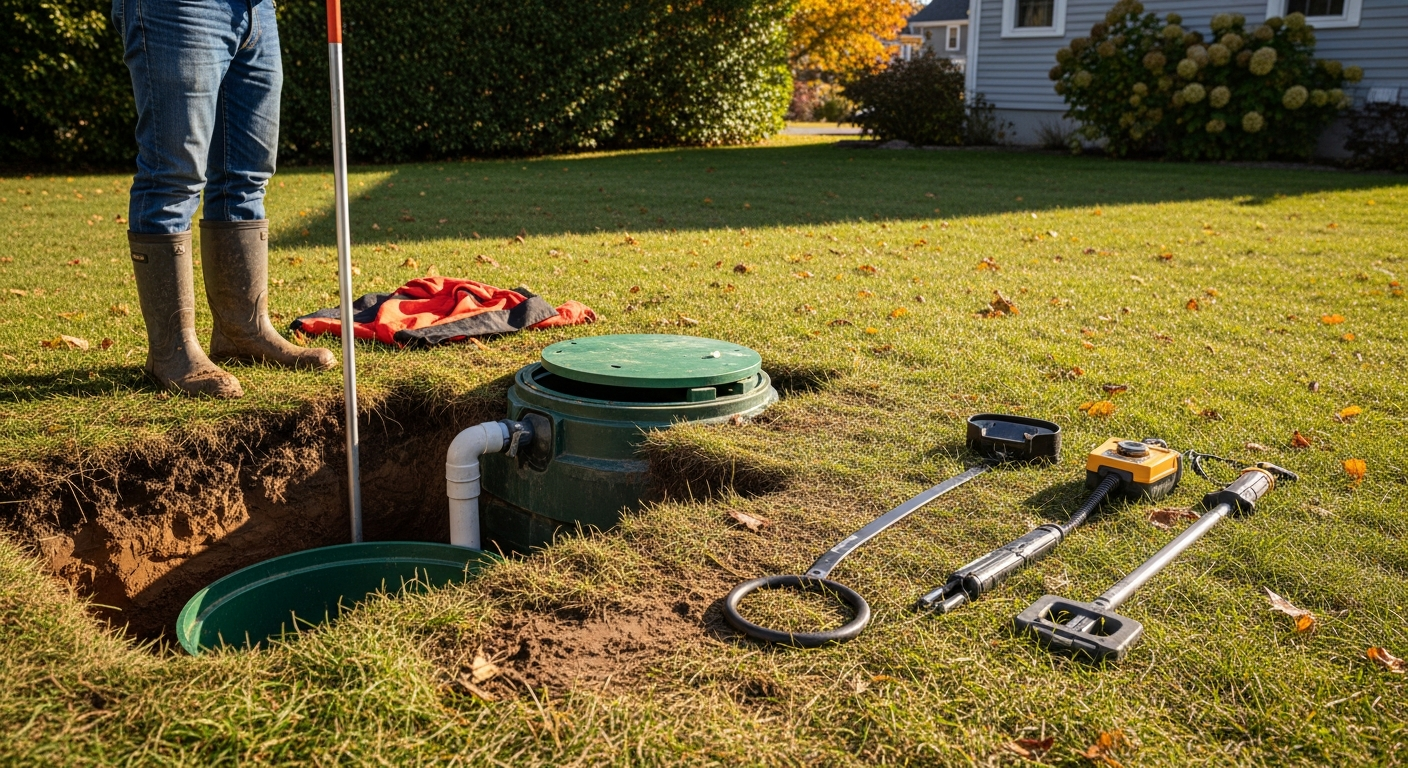
You're booked for a Title 5 on a 1948 cape on a quiet street in the Furnace Brook valley near the West Quincy line. The lender wants a Title 5 because the property records show a private system. You confirm the disposal field with a probe and find a leach trench that has not been touched since the system was installed. The closing is in four weeks.
Quincy is a dense city of nearly a hundred thousand people, almost entirely sewered to MWRA's Deer Island system through the Quincy collection network. The private-septic inventory is in the dozens, not the hundreds. The Quincy Health Department on Coddington Street processes a small handful of Title 5 inspections each year. Working with that BOH is unlike working with a Cape town because the institutional knowledge lives in one or two agents and the file system is built around the parcels, not around a steady inspection volume.
Part of the MA Board of Health Title 5 Submission guide.
Where Quincy's Septic Inventory Sits
The remaining private systems cluster in three pockets:
- Furnace Brook valley — a narrow band of older homes on lots backing into the Furnace Brook drainage where the sewer extension never reached. Pre-1960 housing stock; many systems are leach trenches at or beyond design life.
- Squantum point — a few coastal-end lots along Dorchester Bay and Squantum Point Park edges where the original system predates the sewer connection that came through Wollaston in the 1950s.
- West Quincy near the Blue Hills boundary — a thin handful of lots adjacent to the Blue Hills Reservation where the topography blocked sewer routing.
Outside those pockets, a property listed as having a private septic is more likely to be a record-keeping artifact than an active system. Confirm with a probe and a tank locate before you commit to the inspection.
The Concentrated-Knowledge Dynamic
Quincy Health has one or two agents who carry the septic file in their head. The rest of the department handles food protection, lead, housing, and the public-health programs that drive a city's day-to-day work. When you submit a Title 5, the file routes to the septic agent and the agent reviews it against an internal map of every known private system in the city.
Two implications for the inspection package:
- The agent already knows the parcel. The Furnace Brook valley systems have a paper trail going back decades. If the property changed hands in 2008, the agent likely has the prior Title 5 on file. Inconsistencies between your inspection and the historical record will get flagged immediately. Pull the prior Title 5 from the homeowner before you start.
- The agent will not give you the benefit of the doubt on shorthand. Because they read so few inspections, every inspection gets read carefully. Vague language, missing measurements, and incomplete sketches all surface as clarification requests. Write tight.
Submission Mechanics
The Quincy Health Department at 1120 Hancock Street accepts Title 5 packages by email at [email protected] with "Title 5 — [property address]" in the subject line. In-person submission at City Hall Annex is accepted but routes through the same intake email after scanning. The phone line at the main department number works for follow-ups, but the agent will ask you to email regardless.
Expect a 10-to-14-day turnaround. Quincy is faster than coastal towns because the queue is small. The exception is when the agent assigned to the file is on rotation or out — the case sits until they return, and the rest of the department does not have the context to move it forward.
The package the BOH expects:
- Title 5 inspection report with the neighborhood pocket named in the property description (Furnace Brook valley, Squantum, West Quincy)
- Tank locate documentation — the city wants to know where the tank is; many records are imprecise
- Site plan or sketch with measurements to lot lines, structures, and any surface-water feature
- Prior inspection cross-reference if a previous Title 5 exists on the parcel
The Three Rejection Patterns
1. Inconsistency with the historical file. If the prior Title 5 from 2008 reported a 1,000-gallon concrete tank and your inspection writes "1,500-gallon plastic tank," the agent flags it. Verify against the prior record before you write.
2. No tank-locate documentation. Older Quincy parcels have inconsistent records. The agent expects the inspector to confirm tank location with a measurement from a fixed reference and to update the file. An inspection that says "tank found, condition fair" without a locate diagram is not enough.
3. Treating a non-septic property as a septic property. A few Quincy parcels show "private septic" in the assessor's record but are actually connected to sewer through a private lateral. If you write a Title 5 on a sewered parcel, the agent will return the file and the homeowner will have wasted the inspection fee. Confirm with the city sewer map and a physical observation before you commit.
The Failure Mode I Warn About
Don't treat a Quincy inspection as a routine inspection that happens to be in a city. The agent's institutional memory is the strongest in any MA town I've worked in, and an inspection that reads as if you didn't pull the prior file or you didn't walk the parcel for the sewer connection comes back marked for revision. The seller's frustration when an inspection is returned for "missing tank-locate measurement" four days before closing is on the inspector, not the BOH.
What Quincy Does Well
The flip side: a tight, well-documented Quincy submission gets approved fast. The agent's familiarity with the inventory cuts the review time. If the prior Title 5 is on file and your inspection matches it cleanly with the expected aging pattern, the sign-off can come in under ten days. Build the relationship with the septic agent and the system works in your favor.
Frequently asked questions
What's the short answer to "Submitting a Title 5 Inspection in Quincy: The Few Septic Systems Left and the BOH That Tracks Them"?
How to file a Title 5 with the Quincy Health Department on the small private-septic inventory that survives in Furnace Brook valley, Squantum, and a few coastal lots. Working with concentrated agent knowledge.
Who does this apply to?
NEIWPCC-certified Title 5 system inspectors in Massachusetts, FDEP-licensed septic contractors in Florida, SCDHS-permitted designers in Suffolk County NY, and the property owners these professionals serve.
Where can I read the underlying regulation?
Every Complos guide links to the source statute or rule in the body. MA Title 5: 310 CMR 15.000. FL HB 1379 / HB 1417. NY: Suffolk County Sanitary Code Article 19. Always confirm with mass.gov / flsenate.gov / suffolkcountyny.gov before acting.
How does Complos help with this?
Complos generates the regulator's exact PDF, validates the inspection against the local overlay, and tracks per-town submission methods so you don't ship the report into a black hole. Start a 14-day trial at complos.ai/signup.
How Complos Helps
Complos's Quincy submission template flags the three pockets where private systems still exist, prompts for tank-locate documentation, and surfaces any prior Title 5 on the parcel from the public-records integration. The watershed lookup tool confirms whether the Squantum or coastal parcels touch any regulated overlay. Look up Quincy BOH submission requirements for the current septic-agent contact and the working email.