 Complos
Septic System Replacement Cost Breakdown by State (2026): MA, FL, NY, CT
Complos · June 4, 2026
Real cost ranges for septic system replacement in Northeast states. Labor, materials, permits, and what drives costs up or down. Includes inspection, pump-out, and contingencies.
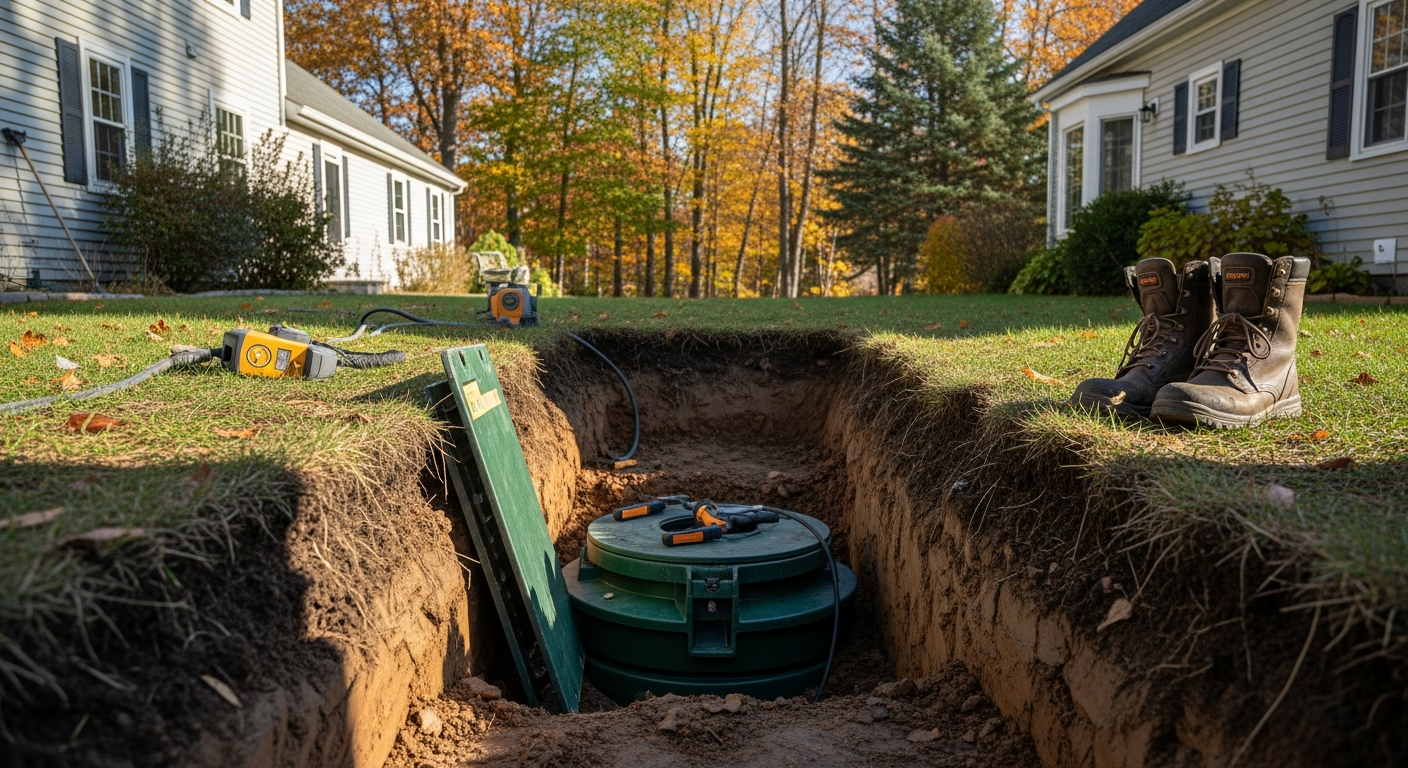
Septic System Replacement Cost Breakdown by State (2026): MA, FL, NY, CT
By The Complos Team. Last reviewed 2026-05-14.
TL;DR. Real cost ranges for septic system replacement in Northeast states. Labor, materials, permits, and what drives costs up or down. Includes inspection, pump-out, and contingencies.
You got the inspection report. It says "structural deficiency" or "system failure." Your Board of Health is now requiring a replacement septic system. Your next question: how much is this going to cost?
The short answer: $12,000–$35,000 for a standard residential system, depending on your state, soil conditions, and site constraints. But the spread matters. This guide walks you through what you're actually paying for and why costs vary so much between Massachusetts and Florida.
The Big Cost Drivers (In Order of Impact)
Before we break down state-by-state pricing, understand what moves the needle:
1. Soil Conditions (±$5,000–$15,000)
- Good (sandy loam, percolates 30–60 min/inch): Standard design, standard cost
- Poor (clay, >120 min/inch percolation): Requires engineered raised bed, mound system, or land application. Add $8,000–$15,000
- Seasonal groundwater (<3 feet below field): Raised bed mandatory. Add $5,000–$10,000
- Ledge/rock (encountered during excavation): Requires blasting or alternative design. Add $3,000–$8,000
Soil testing costs $300–$800 upfront but saves $10,000+ in contractor surprises.
2. Site Access & Setbacks (±$3,000–$10,000)
- Good (level lot, wide property, no wells/water bodies nearby): Standard laterals, efficient layout
- Constrained (steep slope, wetlands nearby, small lot): Requires custom design, pump chamber, uphill discharge, or reduced-load system. Add $5,000–$10,000+
- Hard to access (narrow driveway, dense trees, buried utilities): Adds labor and equipment rental. Add $2,000–$5,000
3. Permitting & Engineering (±$800–$2,000)
- Simple permit (MA standard lot, good soil): $400–$600 engineering + $200–$400 permit
- Complex design (raised bed, mound, pump system): $1,200–$2,500 engineering + $400–$1,000 permit
- Multiple reviews (FEMA floodplain, wetlands, endangered species): Each adds $500–$1,500
4. Tank Type (±$1,000–$3,000)
- Concrete tank (standard): $2,500–$4,000
- Fiberglass tank (lighter, corrosion-resistant, more expensive): $3,500–$5,500
- Plastic tank (lightest, budget option, less durable): $1,500–$2,500
- Two-compartment tank (required in some states): Add $500–$1,000 vs. single-chamber
5. Labor & Contractor Overhead (±30–50%)
Labor rates vary wildly by region and contractor size:
- MA small town: $4,000–$7,000 labor
- FL/warmer climate: $3,000–$5,000 labor (less seasonal constraint)
- Major metro area: $8,000–$12,000 labor (premium pricing)
Choosing a small local contractor vs. a corporate chain can save $3,000–$5,000, but quality/timeline tradeoffs exist.
State-by-State Pricing (2026)
Massachusetts
Standard Residential (Good Soil, Level Lot)
- Tank: $3,000–$4,000
- Distribution field: $3,000–$5,000
- Labor & installation: $4,000–$7,000
- Design & permits: $1,000–$1,500
- Total: $11,000–$17,500
Notes: MA requires two-compartment tanks (Title 5 standard). Soil testing is almost always required and worth $400–$600 upfront. Fall/winter pricing lower (contractor availability); spring/summer higher by 15–20%.
Raised Bed or Mound System (poor soil or high groundwater)
- Tank: $3,500–$4,500
- Engineered field: $6,000–$10,000 (more materials, site work)
- Labor: $5,000–$8,000
- Design & permits: $1,500–$2,500
- Total: $16,000–$25,000
Pump System (uphill discharge or constrained site)
- Add: $2,000–$4,000 (pump chamber, controls, pump replacement every 7–10 years @ $800–$1,500)
Florida
Standard Residential (Good Soil, Adequate Setbacks)
- Tank: $2,500–$3,500 (fiberglass common in FL; slightly cheaper than MA concrete)
- Distribution field: $2,500–$4,000 (sandy soil, good percolation)
- Labor & installation: $3,000–$5,000 (lower labor cost than MA)
- Permits: $300–$600 (county variation; some free)
- Total: $8,500–$13,500
Notes: No two-compartment mandate (though DEP increasingly recommends it). Smaller, simpler systems average lower cost. Spring/summer pricing higher due to rain delays and contractor demand.
BMAP Zone Compliance (N-R system addition)
- N-R system device: $3,500–$6,000
- Installation & integration: $1,000–$2,000
- Permits: $200–$400
- Add: $4,700–$8,400 to standard system cost
- New total: $13,000–$22,000 (system replacement + compliance)
New York / Suffolk County
Standard Residential
- Tank: $3,000–$4,000
- Distribution field: $3,500–$5,500 (colder climate, seasonal constraints)
- Labor: $4,500–$7,000
- Permits: $400–$800
- Total: $11,400–$17,300
I/A OWTS Systems (Suffolk Save Our Lagoon grant pathway)
- Advanced treatment system: $4,000–$8,000 (higher-end devices than standard)
- Installation & integration: $2,000–$4,000
- Permits: $500–$1,000
- Total: $6,500–$13,000 (system-only, before tank/field)
Connecticut
Standard Residential
- Tank: $3,000–$4,000
- Distribution field: $3,500–$5,000
- Labor: $4,000–$6,500
- Permits & design: $800–$1,200
- Total: $11,300–$16,700
Notes: Similar to MA cost structure. Seasonal variation significant (winter shutdowns). Some towns require health department agent final inspection (add $300–$500 if not included in permit).
What You're Actually Paying For
Break down a typical $15,000 replacement project:
| Item | Cost | % of Total |
|---|---|---|
| Septic tank (materials + placement) | $3,500 | 23% |
| Distribution field (trenching, stone, laterals, soil restoration) | $4,000 | 27% |
| Labor (excavation, installation, backfill, cleanup) | $5,500 | 37% |
| Permits, design, inspections | $1,000 | 7% |
| Contingency buffer (unforeseen conditions, small overages) | $1,000 | 7% |
| Total | $15,000 | 100% |
What's NOT Included (Often Surprises)
- Pump-out before replacement: $150–$400
- Septic tank lid excavation (if buried): $300–$800
- Site grading/restoration (heavy equipment, topsoil reseeding): $1,000–$3,000
- Driveway repair (if contractor's excavator damages it): $2,000–$8,000
- Utility locates (gas, electric, water lines; some areas mandatory): $200–$600
- Soil testing (if not done before design): $400–$800
- Tie-in costs (if rerouting plumbing from old to new tank location): $500–$2,000
- DEP/environmental review (if property has wetlands or is in sensitive area): $500–$2,000
Budget 10–20% contingency ($1,500–$3,000) above any quote.
Timeline: From Inspection to System Live
- Week 1: Inspection report issued
- Week 2–3: Contractor quote + soil testing (if needed)
- Week 3–4: Permit application + engineering design (4–6 weeks review in most towns)
- Week 7–8: Permit approved; contractor mobilizes
- Week 8–10: Excavation, tank/field installation, backfill
- Week 11: Health department final inspection
- Week 12: System approved; closeout certificate issued
In a rush? Some contractors can reduce timeline to 8 weeks if permits are already in hand or the town is responsive. Don't expect faster.
Cost Negotiation Points
- Multiple quotes: Get 3–4; pricing varies by contractor 20–40%
- Tank type: Fiberglass vs. concrete, single vs. two-chamber (saves/costs $500–$1,000)
- Timing: Fall/winter off-season 10–15% cheaper; spring/summer premium pricing
- Scope creep: Pin down exactly what's included (site restoration? topsoil? seeding?)
- Warranty: New systems typically 5-year structural warranty; factor labor cost if tank fails prematurely
Key Takeaway
A residential septic system replacement in the Northeast runs $11,000–$25,000 depending on soil, site, and state. Most average $14,000–$18,000. Poor soil or constrained sites can push it to $25,000–$35,000. Florida runs slightly cheaper ($9,000–$20,000) due to easier soil and lower labor costs.
The biggest variables you can control:
- Get soil tested before design ($400–$600 saves $5,000+ in surprises)
- Shop contractors (20–30% variation is common)
- Plan for contingency (unforeseen conditions cost $1,000–$5,000 average)
Ready to estimate your system cost? Use the free septic cost estimator →
Got a Title 5 deficiency? Check compliance status and next steps →
Questions about septic replacement? Join our list for state-specific guidance →
Frequently asked questions
What's the short answer to "Septic System Replacement Cost Breakdown by State (2026): MA, FL, NY, CT"?
Real cost ranges for septic system replacement in Northeast states. Labor, materials, permits, and what drives costs up or down. Includes inspection, pump-out, and contingencies.
Who does this apply to?
NEIWPCC-certified Title 5 system inspectors in Massachusetts, FDEP-licensed septic contractors in Florida, SCDHS-permitted designers in Suffolk County NY, and the property owners these professionals serve.
Where can I read the underlying regulation?
Every Complos guide links to the source statute or rule in the body. MA Title 5: 310 CMR 15.000. FL HB 1379 / HB 1417. NY: Suffolk County Sanitary Code Article 19. Always confirm with mass.gov / flsenate.gov / suffolkcountyny.gov before acting.
How does Complos help with this?
Complos generates the regulator's exact PDF, validates the inspection against the local overlay, and tracks per-town submission methods so you don't ship the report into a black hole. Start a 14-day trial at complos.ai/signup.